
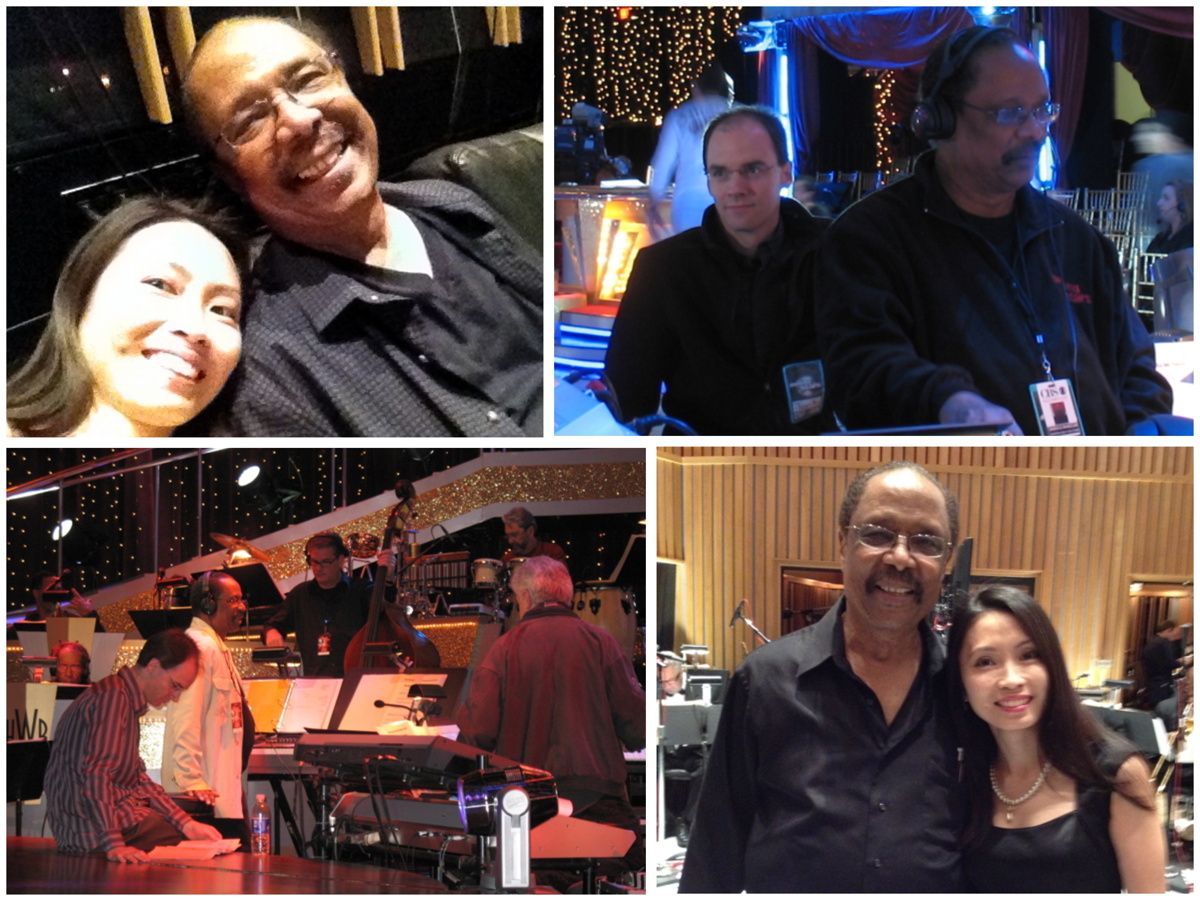
Harold Wheeler, 1943-2026
Maestro and Friend
Harold Wheeler died June 24, 2026. It has been hard to know what to say about someone who was such a big part of our lives. Much has already been written about Harold and his illustrious career on Broadway, in Hollywood, and on numerous recordings. He was a music director for Burt Bacharach, the Academy Awards, and, most well-known, 17 seasons of Dancing With the Stars. His over 50 years as a Broadway arranger, orchestrator, and music director earned him a “Special Tony Award for Lifetime Achievement in the Theater”. He wrote and performed on numerous commercial jingles and hit records. Many people don’t realize he even was an arranger and producer on the famous disco album, “Star Wars and Other Galactic Funk”.
To us, he was Harold – a mentor, colleague, and friend of 20 years. He was a man who defined professionalism. He was a person who knew his stature, but never took himself too seriously. He always cared for those around him, and would defend anyone in his close-knit musical circle.
Our memories of Harold are of his hand-written scores, late night telephone chats during projects, lunches during shows, many trips to his home, and dinners with friends. Then there was the laughter; so much laughter on the bandstand, during breaks, at meetings, on the phone. Sometimes it was because this business is just so bizarre. Sometimes it was because we had to laugh because otherwise you might cry when things got Kafkaesque. Often it was simply because it was fun to remind ourselves that people are fun and silly, and the people around us are all that matters.
Without saying it, Harold always reminded us that being surrounded by lights, fame, celebrity, or money, didn’t mean much unless you could love those with whom you shared it. If you couldn’t find some joy, even if it came from a bit of witty sarcasm, then there wasn’t much reason for all of it.
Harold was not a perfect person, and he would be the first to admit it. His recognition of his own faults gave him the humility and compassion to accept the faults in others. He always demanded excellence from those with whom he worked, but he never forgot that we are all human. That humility also made him a superb professional who could smooth ruffled feathers and put the most demanding producers and celebrities at ease. When Harold was on the gig, they knew they were in good hands.
Harold cared about people, and he always worked while thinking of those around him. He didn’t think only about the people who had hired him. He also thought about the people working with him; the performers, copyists, engineers, directors and others who were required to bring the music to life. He would structure both his music and his workflow to enable those people to do their best work. When we were on a project with Harold Wheeler, we knew that everyone was expected to watch out and support each other, because Harold was watching out for us.
Harold himself could be exhausted by the demands of being a music director, but he was always re-energized by the payoff of being a part of the band. He loved “the hang” with his fellow musicians more than anything else; and that made him a musician other musicians loved. Harold also understood the challenges of being a minority person of color in a predominantly white society. He always cared for those who faced similar challenges, whomever they were.
On top of all that, Harold Wheeler was a stupendously skilled musician. Watching him write was daunting. His pencil moved with a speed we have never witnessed in anyone else. His hand was an extension of his mind, both on the page and at the piano. With perfect pitch, he could sit with a pair of headphones and a stack of score paper, and transcribe a recording directly to a new arrangement — no need to sketch it first. He could simply listen and then hear the new arrangement in his head. That was one of his secrets. He heard everything in his head before the pencil ever touched paper. He said the music went from his head to his heart to his hand.
Having his heart between his head and hand was a key element of both Harold’s writing and playing. It was never a technical exercise. He didn’t write a chart for instruments or voices. He wrote a chart for the people singing or playing those instruments. (You’d sometimes see their names next to their lines in the score.) The humanity made his music beloved because it moved people. Aside from knowing how to make an ensemble resonate and sing, he could use music to make people cry, laugh, and dance. Vocalists in particular adored him both as an arranger and accompanist because he knew how to support without ever getting in the way. He elevated the performance of anyone with whom he worked.
Harold, you are responsible for much of our careers, and you will be a part of everything we do. When faced with a musical or professional puzzle, we will still find ourselves asking, “What would Harold do?” The answer will probably be the best of all options. You gave us so much, and we hope we were able to give you much in return. Thank you for the music. Thank you for the knowledge. Thank you for the love. We miss you dearly.